
Secondary Glazing vs. Replacement Double Glazing
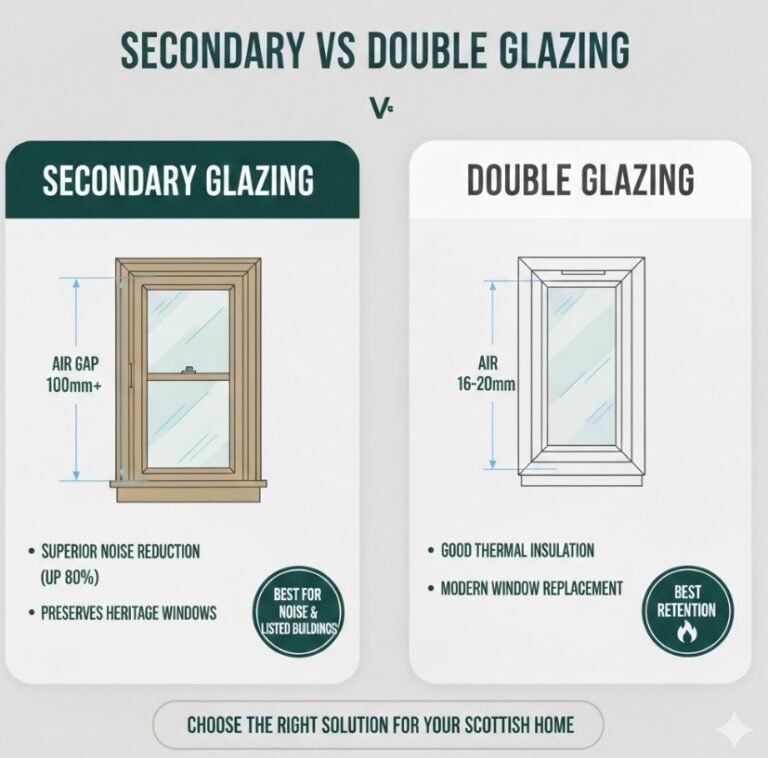
Which is Right for You?
Secondary glazing offers significant advantages over double glazing in Scotland’s varied and often harsh climate. It is particularly well suited to older and traditional buildings, which are common across Scottish cities and towns. Unlike double glazing, secondary glazing can be installed without altering existing windows, helping to preserve the character of listed or conservation properties. It also provides excellent thermal insulation, reducing heat loss and improving indoor comfort while keeping installation costs and disruption relatively low.
Another key benefit of secondary glazing is its superior performance in reducing noise, which is especially valuable in busy urban areas or near main roads. The additional internal pane creates a wider air gap than most double-glazed units, enhancing soundproofing and reducing condensation. Secondary glazing is also more flexible, as it can be removed or adjusted for ventilation and cleaning. This makes it a practical, energy-efficient solution for Scottish homes seeking comfort without major structural changes.
Secondary glazing is often a more practical and sustainable option than double glazing for Scottish homes, particularly where weather exposure is high. It improves energy efficiency by adding an extra insulating layer that helps retain heat during cold winters and reduces draughts without replacing existing windows. This not only lowers heating costs but also reduces waste, as original frames and glass are kept in place. Installation is quicker and less invasive, making it ideal for occupied homes.
Contact us today for more inforamtion.