
Improving EPC Ratings for Period Homes & Rental Properties
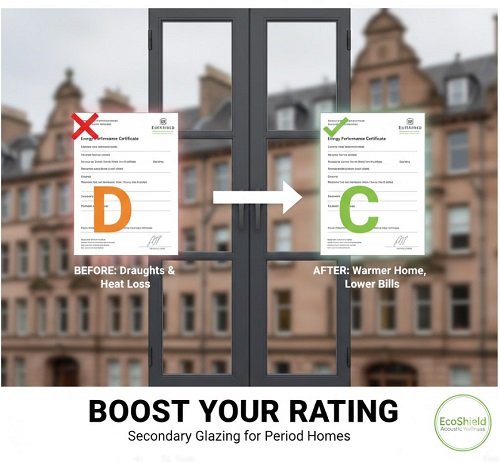
Navigating the 2026 EPC "Fabric Performance" Metric
Under the 2026 EPC reforms, “Fabric Performance”—how well your building retains heat—is now a headline metric. For owners of historic or listed properties, traditional double glazing is often not an option due to conservation restrictions. Secondary glazing provides a high-performance alternative that significantly reduces heat loss. By creating a sealed thermal barrier, it improves the U-value of your windows by up to 60%, helping your property move from a failing Grade E or D toward the mandatory Grade C requirement.
The Cost-Effective Alternative to Window Replacement
Meeting the new Minimum Energy Efficiency Standards (MEES) doesn’t have to mean a full-scale renovation. Replacing original sash windows with slimline double glazing is not only expensive but can take months for planning approval. Secondary glazing is a “non-intrusive” installation that rarely requires listed building consent. It allows landlords to protect their investment and meet October 2026 compliance deadlines at a fraction of the cost, making it the most sensible financial choice for professional property portfolios.
Combatting Cold Spots, Draughts, and Energy Waste
An EPC assessment isn’t just about glass; it’s about air tightness. Old windows are the primary source of draughts that pull a property’s score down. Our secondary glazing units feature high-performance seals that eliminate draughts entirely, creating a “still air” zone that acts as a powerful insulator. This doesn’t just look good on paper—it results in a warmer, more marketable home with lower utility bills, ensuring your property remains a valuable asset in a competitive rental market.
Contact us now for more information.