

Fitting secondary glazing is usually the start of a warmer, quieter home rather than the end of the job. Once the new inner windows are in, they need very little looking after. But Scottish winters are long, damp and dark, and a few simple habits make a real difference to how clear, dry and easy to use your windows stay between October and April.
This guide covers the three questions homeowners ask most often once the evenings draw in: why condensation sometimes appears between the panes, how to clean the gap without damaging anything, and what to check each season so the original windows behind the glazing stay in good health.
How secondary glazing works with your existing window
Secondary glazing is a separate, slim window fitted on the room side of your existing one. The original window, whether it is a timber sash and case, a casement or a steel frame, stays exactly where it is. Between the two sits a pocket of air, and that cavity is what does the work: it slows heat escaping from the room, cuts down draughts and helps to reduce noise from outside.
Because the original window is kept, secondary glazing is a popular choice for traditional buildings, conservation areas and flats where replacing the windows is not possible or not wanted. It also means you are now looking after two windows instead of one. The good news is that they help each other, provided the balance between them is right.
Why condensation can appear between the panes
Condensation forms when warm, moist air meets a cold surface. In a room with secondary glazing, the inner pane is now much warmer than the old single glazing used to be, so you should see far less condensation on the room side than before. That is one of the quiet benefits most people notice in their first winter.
The surface that is still cold is the inside face of the original window. If moist air from the room finds its way into the cavity, it can settle on that cold glass as mist or droplets. This is called cavity condensation, and it is the most common question installers hear after a cold snap.
The usual principle, set out in conservation guidance for traditional buildings, is simple: the inner secondary unit should be the better seal, and the outer original window should be slightly less airtight. That way, the small amount of air in the cavity is linked to the outside air, which is cold and holds little moisture, rather than to the warm, humid air in your room. If the old window has been completely sealed up with filler, tape or heavy draught-proofing, the cavity can trap moisture instead of letting it go.
Practical ways to keep the cavity clear
- Keep the secondary unit closed and latched when you are not using it, so its seals can do their job.
- Do not seal the original window shut. Light draught-proofing on the outer sash is usually fine, but avoid filling every gap.
- Lower the moisture in the room. Use extractor fans in kitchens and bathrooms, put lids on pans, and avoid drying washing on radiators in rooms with secondary glazing where you can.
- Keep rooms gently heated. Rooms that are left very cold for long spells, such as spare bedrooms, are more likely to show condensation.
- Air the room properly. When you want fresh air, open both the secondary unit and the original window together, then close the secondary unit first when you are done.
If a pane mists up occasionally on a very cold morning and clears by lunchtime, that is normal. If water is regularly running down the glass and pooling on the sill, speak to your installer. It may simply mean an adjustment is needed to the seals or the outer window.
Cleaning the glass and the cavity
Most secondary glazing is designed so that you can reach every surface. Sliding units move aside, hinged units swing open like a door, and lift-out panels can be taken out completely. EcoShield’s hinged secondary glazing and lift-out secondary glazing are both chosen partly with this in mind, as they give clear access to the inside face of the original window.
A gentle approach is all that is needed:
- Use warm water with a few drops of washing-up liquid and a soft cloth or sponge.
- Dry the glass with a lint-free cloth or a clean microfibre to avoid streaks.
- Avoid abrasive pads, scouring powders and strong solvents on the frames, seals and any coated glass.
- Wipe the frame channels and tracks with a damp cloth, and brush out grit or dead insects from the bottom of the cavity.
- Check the manufacturer’s care notes for your system before using any spray, polish or lubricant on moving parts.
A once-a-season clean of the cavity is usually enough. Many people do it at the same time as their autumn and spring cleaning, when the light is good and the weather is mild enough to have a window open.
About this guide: this article was written for EcoShield by Crowstep Digital, the Stirlingshire studio that looks after local SEO for Scottish home-improvement firms, including this website. The practical advice reflects general good practice for secondary glazing in traditional homes. For anything specific to your own windows, the EcoShield team is the best place to ask.
A seasonal checklist for your windows
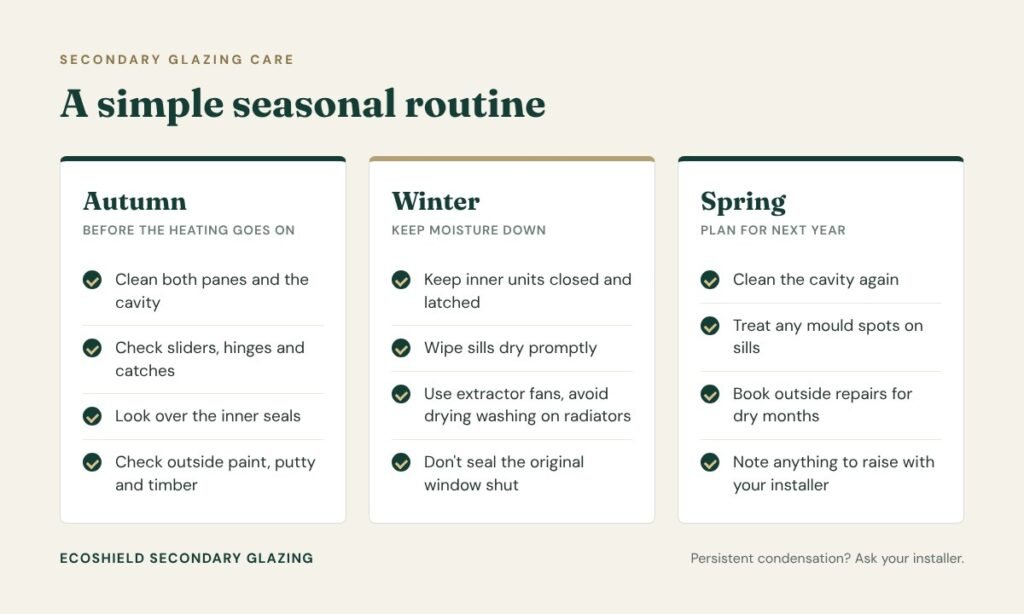
Secondary glazing protects the original window from draughts on the inside, but the outside of that window still faces the Scottish weather. A short routine twice a year keeps both layers in good order.
In autumn
- Clean both panes and the cavity before the heating goes on for the season.
- Open and close each secondary unit to check that sliders run smoothly, hinges move freely and catches lock properly.
- Look at the brush or rubber seals around the inner unit. They should be clean, in place and not flattened or torn.
- From outside, check the original window for flaking paint, cracked putty or soft timber at the bottom of the sash, where water tends to sit.
Through the winter
- Wipe away any condensation on the sills promptly, so the timber does not stay wet.
- Keep curtains and blinds from pressing tight against the glass overnight, which can trap cold, damp air.
- Keep an eye on rooms used for drying washing or cooking, and ventilate them well.
In spring
- Clean the cavity again and remove any mould spots from the sills with a mild cleaner.
- Arrange any outside repairs to the original window, such as painting or putty work, for the drier months.
- Make a note of anything that did not work well over winter, so it can be looked at before the next one.
Safety and everyday use
Secondary glazing should never get in the way of a window you may need to open quickly. If a window is part of an escape route, or if you simply like to throw it open on a summer evening, make sure everyone in the house knows how the inner unit opens. Keep keys for any lockable units somewhere sensible and easy to reach, and do not block access with furniture.
Children and pets are often fascinated by the gap between the panes. Keep the secondary unit closed when the room is not in use, and avoid storing anything on the sill inside the cavity, where it can trap moisture or scratch the glass.
When to ask for help
Most issues have simple answers. It is worth getting in touch with your installer if you notice any of the following:
- Condensation in the cavity that does not clear, even after a few dry days.
- A secondary unit that sticks, drops or will not latch.
- Seals that have come loose, split or gone hard.
- Damp, rot or water marks on the original window frame or the wall below it.
If you live in a period property and are still deciding whether secondary glazing is right for you, EcoShield’s guide to secondary glazing for sash and case windows explains how the systems work with traditional windows. For advice on your own home, you can contact the EcoShield team directly.
With a little care each season, secondary glazing should keep your rooms warmer, quieter and more comfortable for many winters to come, while the original windows behind it stay protected and in good working order.